

Sustainable Corporate Office Design Trends in India: Creating Energy-Efficient and Productive Workspaces for the Future
As India continues to establish itself as a premier global hub for innovation and business operations, the demand for sustainable corporate office designs has intensified. In 2026, corporate workspaces are increasingly prioritizing energy efficiency, employee well-being, and environmental stewardship. This evolution is propelled by the expansion of Global Capability Centers (GCCs), which now number over 1,900 and employ approximately 1.9 million professionals, generating revenues exceeding $64 billion annually, with projections toward $100 billion by 2030 (various industry reports including Nasscom, Inductus, and JLL, 2025).
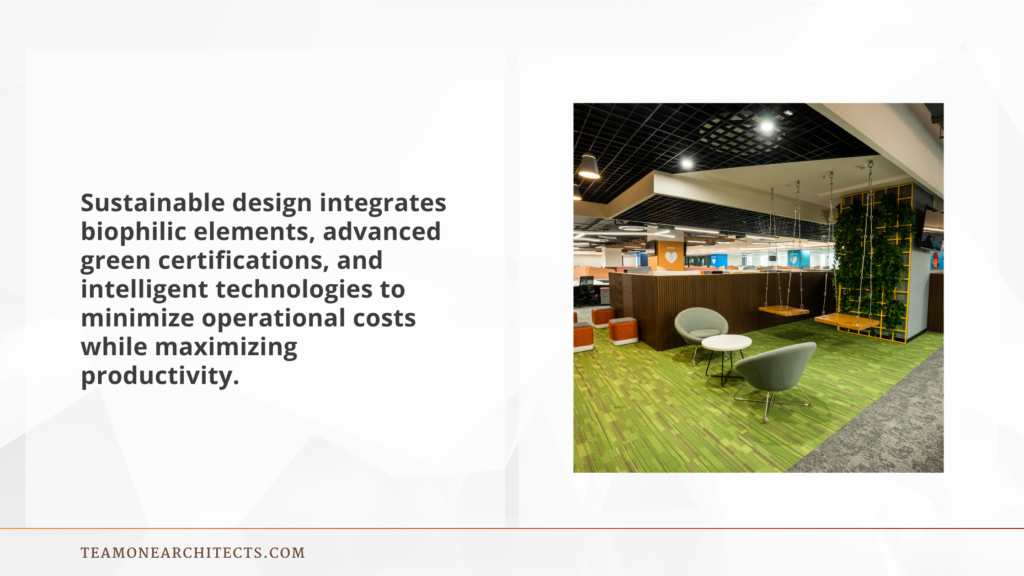
Sustainable design integrates biophilic elements, advanced green certifications, and intelligent technologies to minimize operational costs while maximizing productivity. Prominent architects in Mumbai, Hyderabad, Pune, and Bangalore lead this transformation, delivering projects aligned with international standards such as LEED and IGBC.
The Growing Momentum of Sustainable Trends in Indian Corporate Offices
By 2026, dominant trends encompass biophilic design, flexible hybrid configurations, eco-friendly materials, and smart building systems. Biophilic features—including indoor greenery, green walls, natural lighting, and water elements—enhance cognitive function and reduce stress. Research indicates that such elements can increase productivity by 6-15% and creativity by up to 15%, while lowering absenteeism (Human Spaces global study; peer-reviewed research on biophilic design benefits).
Energy-efficient innovations, such as LED lighting, motion sensors, advanced HVAC systems, and renewable energy integration, have become essential in new developments, supporting India’s net-zero ambitions. India maintained its third global ranking for LEED certifications in 2024, with 370 projects covering 8.5 million gross square meters (U.S. Green Building Council, 2025). This progress underscores a commitment to resilient and low-carbon built environments.These advancements are prominently featured in corporate office interior design initiatives across key cities, where sustainability integration aids talent retention and fulfills environmental, social, and governance (ESG) obligations.
Key Sustainable Design Elements Transforming Workspaces
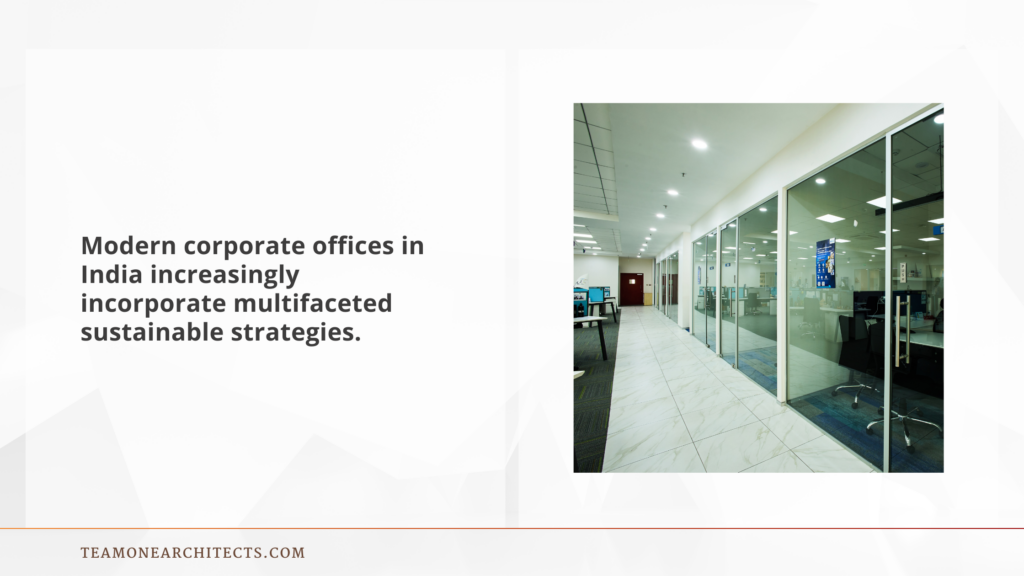
Modern corporate offices in India increasingly incorporate multifaceted sustainable strategies:
- Biophilic Integration: Beyond visual greenery, multisensory approaches—including natural scents, sounds, and textures—further alleviate stress and boost satisfaction (studies on multisensory biophilic environments).
- Modular and Flexible Layouts: Adaptable furniture and zoning support hybrid work, optimizing space utilization and promoting collaboration.
- Smart Technologies: IoT-enabled systems for energy management, occupancy sensing, and air quality monitoring reduce consumption by 30-40% compared to traditional designs.
- Eco-Friendly Materials: Use of recycled, low-VOC, and regionally sourced materials minimizes environmental impact while enhancing indoor air quality.
- Wellness-Focused Amenities: Dedicated areas for relaxation, fitness, and mental health reflect growing emphasis on holistic employee support.
These elements not only align with regulatory incentives but also yield long-term operational savings and improved occupant health.
GCCs: Catalyzing Demand for Scalable and Eco-Conscious Workspaces
The surge in GCCs has heightened requirements for high-performance, scalable offices. Major hubs like Mumbai and Hyderabad accommodate a substantial portion of these centers, specializing in IT, finance, R&D, and emerging technologies. GCC global capability centers design Mumbai frequently features flexible zones, wellness amenities, and energy-efficient infrastructure tailored for hybrid models.Recognized architectural firms in Bangalore and other regions prioritize modular constructions and green practices, securing certifications that substantially lower energy use. This focus positions GCCs as innovation drivers while addressing sustainability mandates.
Quantifiable Benefits of Energy-Efficient and Biophilic Design
Adopting these trends delivers tangible outcomes:
- Enhanced Productivity and Well-Being: Biophilic offices elevate employee productivity and well-being by 6-15%, with reduced stress and improved cognitive performance (Human Spaces; University of Exeter studies).
- Operational Cost Reductions: Optimized systems significantly decrease utility expenses through efficient lighting, ventilation, and resource management.
- Talent Acquisition and Retention: A majority of corporate occupiers prioritize wellness-oriented features, aiding in attracting top talent (JLL India reports).
- Environmental and Regulatory Compliance: Lower carbon footprints support national sustainability goals and enhance corporate reputation.
Entities distinguished as award-winning architectural firms in India for sustainable builds exemplify proficiency in realizing these advantages.
As India progresses toward comprehensive sustainable development, corporate offices must adopt energy-efficient and biophilic designs to sustain competitiveness. Collaborating with seasoned architecture firm in Mumbai or expert office interior design company India guarantees workspaces that are ecologically responsible, innovative, and growth-oriented. Such strategic investments foster enduring success in a dynamic global landscape.
(Sources include Nasscom, JLL India, U.S. Green Building Council, Human Spaces global study, and peer-reviewed research on biophilic design benefits.)