

Sustainable Tech Office and Data Center Design Trends in the USA: Energy-Efficient Workspaces and Infrastructure for 2026
The United States continues to lead in technological innovation and infrastructure development in 2026, with a strong emphasis on sustainable design for corporate offices, tech workspaces, and data centers. Driven by the rapid expansion of AI, cloud computing, and hyperscale facilities, cities such as New York, San Francisco, Austin, and Chicago are at the forefront.
The U.S. hosts over half of the world’s hyperscale data centers, with significant growth in AI-dedicated capacity projected to reach 33% globally by 2025, extending into 2026.Sustainable practices, including LEED certifications and energy-efficient architectures, are integral. States like Massachusetts, Illinois, and New York lead in LEED-certified space per capita (U.S. Green Building Council, 2024-2025 reports). Leading architects in New York, architects in Austin, and architects in Chicago are delivering projects that prioritize biophilic elements, net-zero goals, and resilient infrastructure.
Emerging Trends in Sustainable Corporate and Tech Offices
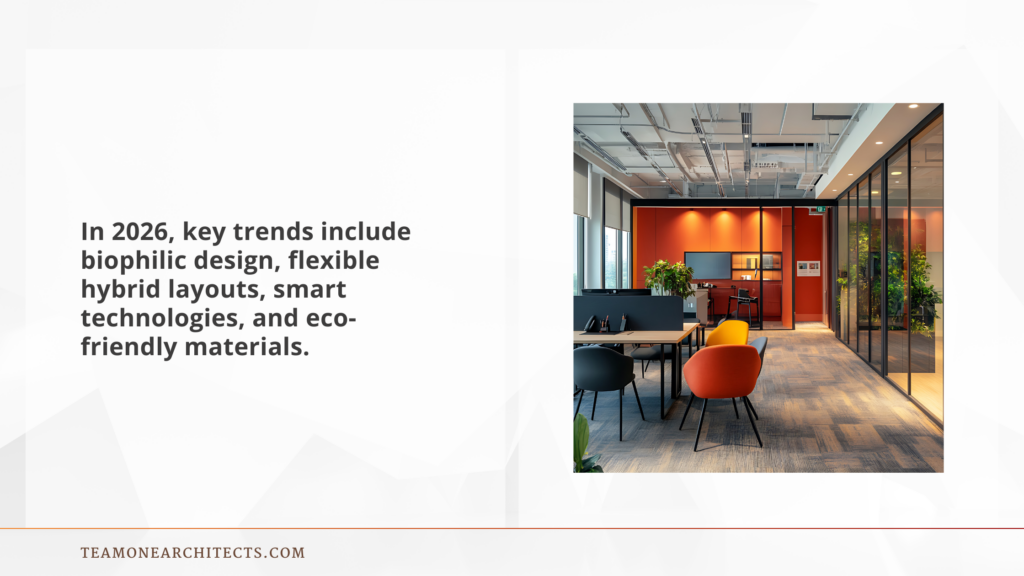
In 2026, key trends include biophilic design, flexible hybrid layouts, smart technologies, and eco-friendly materials. Biophilic features—such as natural lighting, indoor greenery, and organic textures—enhance well-being and performance.
Studies confirm that biophilic offices can boost productivity by 6-15% and creativity by up to 15%, while reducing stress (Human Spaces global study; peer-reviewed biophilic design research).
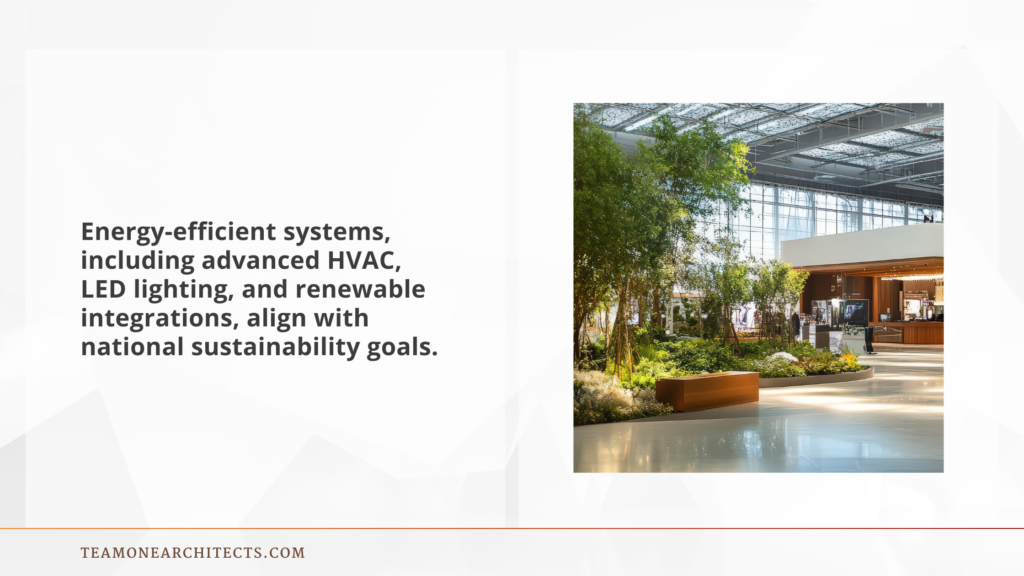
Energy-efficient systems, including advanced HVAC, LED lighting, and renewable integrations, align with national sustainability goals. These trends are prominent in corporate office interior design and corporate workplace design New York, where firms address hybrid work and ESG requirements.
Core Elements of Modern Sustainable Workspaces
Contemporary designs feature:
- Biophilic Integration: Multisensory elements like green walls and natural views to improve cognitive function and reduce absenteeism.
- Adaptive Layouts: Modular spaces supporting collaboration in tech-focused environments.
- Intelligent Systems: IoT for energy optimization, achieving significant reductions in consumption.
- Sustainable Materials: Low-VOC and recycled options enhancing air quality.
- Wellness Amenities: Zones promoting physical and mental health.
These strategies are evident in modern tech office interior designers in Austin and scalable tech office interior designers in New York.
Tech Offices and Global Capability Centers in Key U.S. Cities
Major hubs like Austin, New York, San Francisco, and Chicago drive demand for high-performance offices. Austin and San Francisco excel in tech innovation, while New York and Chicago blend finance and IT. Designs for GCC office interior designers Austin, global capability center design, and IT office design Chicago incorporate flexible, wellness-oriented features.
Renowned architectural firms in San Francisco and tech office design San Francisco emphasize green certifications and modular approaches.
The Boom in AI-Driven Data Centers
AI and hyperscale growth necessitate advanced data center design companies and AI data center design companies. Focus areas include energy-efficient data center architecture and hyperscale data center architects. Specialized R&D facilities design architects, including biotech R&D facility architects San Francisco, support innovation.
Experts in net zero architecture firms and LEED consultants California ensure compliance and efficiency.
Benefits of Sustainable Design
These approaches provide:
- Productivity Gains: 6-15% increases from biophilic elements.
- Cost Savings: Reduced operational expenses.
- Talent Attraction: Enhanced wellness features.
- Environmental Impact: Alignment with sustainability goals.
Additional expertise in sustainable healthcare architects New York and life sciences architecture firms Boston extends benefits to related sectors.
In 2026, sustainable design is essential for competitive tech offices and data centers in the USA. Partnering with experienced architecture firm in San Francisco, sustainable architecture firms in Austin, or specialists in architects in Los Angeles delivers innovative, responsible spaces. This focus drives long-term success in a dynamic digital economy.
(Sources include U.S. Green Building Council reports, Human Spaces study, industry analyses on AI data centers, and peer-reviewed biophilic design research.)